Four Royal Tiaras That Tell the Story of a Dynasty
The Lover's Knot, the Diamond Diadem, "Granny's tiara" and the Fringe — four jewels whose histories are really the history of a family.
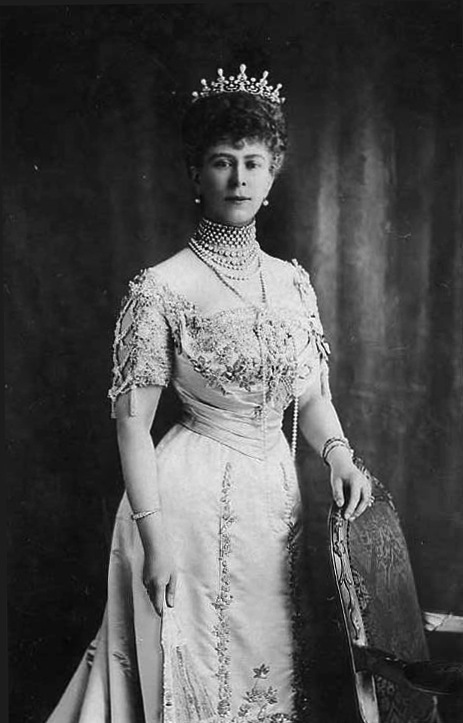
A great tiara is never just a great jewel. The finest royal tiaras are documents — of marriages and gifts, of grandmothers and granddaughters, of designs reimagined across a century. Four pieces in particular tell, between them, much of the story of the modern British royal family. Here is each, and the lives it has lived.
The Cambridge Lover’s Knot
Perhaps the most romantic of all, the Cambridge Lover’s Knot Tiara was commissioned by Queen Mary around 1913–14 and made by the crown jeweller, Garrard. Mary asked for it to echo a tiara owned by her own grandmother, Princess Augusta, Duchess of Cambridge — so it was born as an act of remembrance. Its design is unmistakable: diamond arches hung with large drop pearls that tremble as the wearer moves, above a row of interlaced “lovers’ knots”.
Queen Mary left it to Queen Elizabeth II in 1953. Decades later it became closely associated with Diana, Princess of Wales, who was lent it as a young bride and wore it often through the 1980s. After 1997 it returned to the royal vault — and in 2015 it reappeared on the Princess of Wales, Catherine, linking three generations of royal women in a single sparkle of pearls.
The George IV Diamond Diadem
If you have ever looked closely at a British stamp, banknote or coin, you have seen the George IV State Diadem. Made in 1820 by Rundell & Bridge for the coronation of the famously extravagant George IV, it is set with 1,333 diamonds — including a pale yellow diamond at the front — and built around the floral emblems of the nations: roses, thistles and shamrocks, alternating with crosses.
Worn by queens regnant and consort in procession to coronations and the State Opening of Parliament, it is one of the most photographed jewels in the world precisely because of those portraits on our money. It is, quite literally, the crown most Britons see every day.
The Girls of Great Britain and Ireland
This one has the loveliest origin. In 1893, when the future Queen Mary married the Duke of York, a committee of women — led by Lady Eva Greville — raised money by public subscription to buy her a tiara from Garrard. They called themselves the “Girls of Great Britain and Ireland”, and the tiara has carried their name ever since.
Mary later had it altered (the pearls along the top swapped for diamonds, the base made detachable as a bandeau), and in 1947 she gave it to her granddaughter, Princess Elizabeth, as a wedding gift. It became Queen Elizabeth II’s favourite — she is said to have called it “Granny’s tiara” — and it, too, appears on coins and banknotes. Few jewels were more closely identified with the late Queen.
Queen Mary’s Fringe Tiara
Designed in the Russian “kokoshnik” style, Queen Mary’s Fringe Tiara is a sunburst of 47 tapering diamond bars — and, cleverly, it can be unclipped from its frame and worn as a necklace. Its fame, though, rests on a moment of near-disaster. On the morning of her 1947 wedding, Princess Elizabeth was being dressed when the tiara’s frame snapped. The crown jeweller was given a police escort to the workshop and back to repair it in time. Disaster averted, it crowned one of the century’s most famous brides.
It has since become the royal wedding-day tiara, worn by Princess Anne in 1973 and Princess Beatrice in 2020 — a piece of “something borrowed” passed gently down the generations.
Jewels that remember
What unites these four is not their carats but their continuity. Each has been gifted, altered, lent and loved across decades, carrying the memory of the women who wore it before. That, more than any diamond, is what makes a royal tiara priceless.
Details of royal jewels are drawn from widely published accounts and the Royal Collection; some specifics vary between sources.


