Queen Mary: The Collector Queen Who Built a Jewellery Legacy
The late Queen's grandmother had the finest eye in Europe — and used it to gather, rescue and preserve many of the jewels the royal family treasures today.
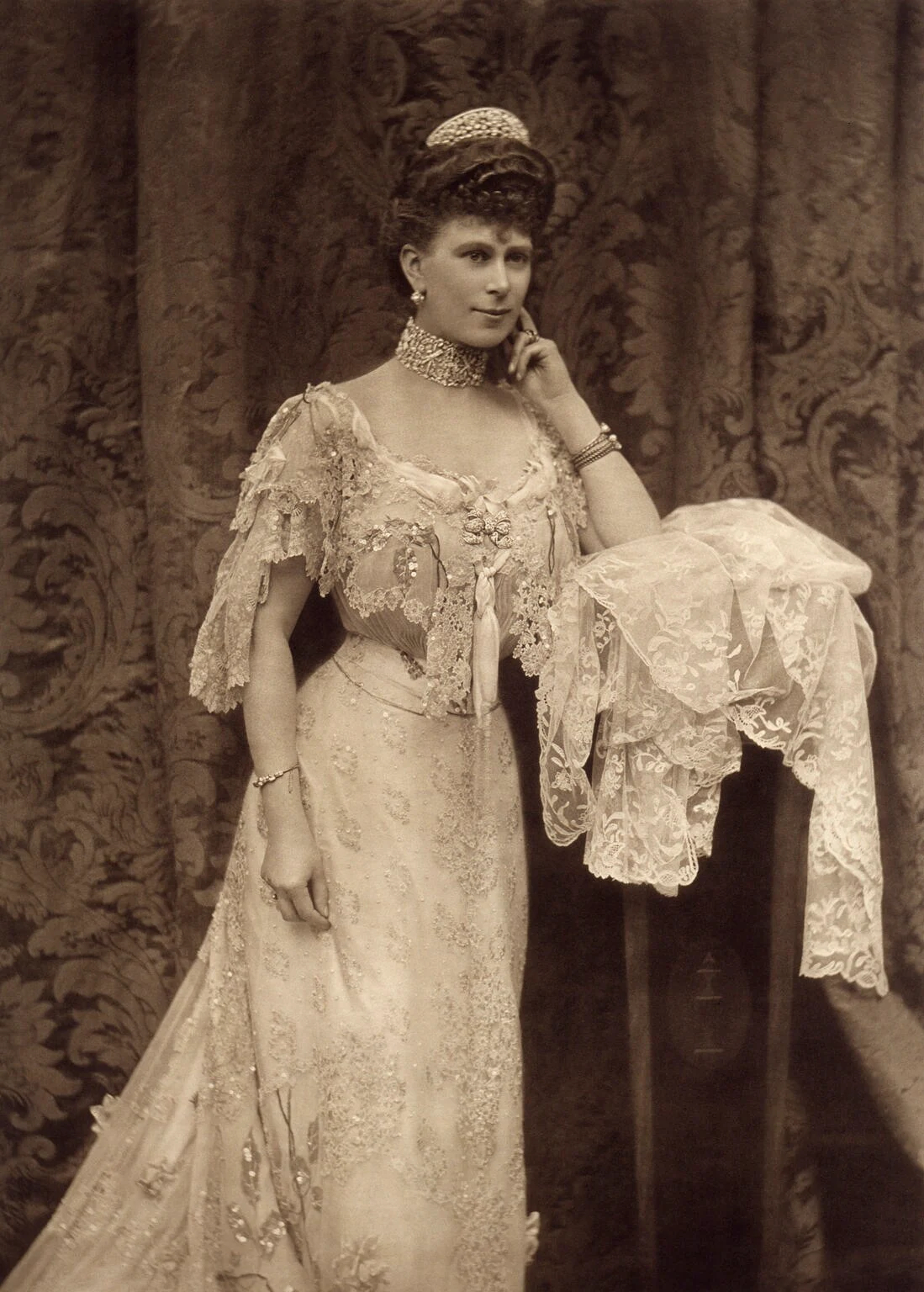
If the British royal family’s jewellery collection has a single architect, it is Queen Mary — consort of George V, and grandmother of Queen Elizabeth II. A passionate, deeply knowledgeable collector with one of the finest eyes in Europe, she spent a lifetime gathering, rescuing and reuniting jewels, and in doing so shaped the collection the family still draws on today.
The finest eye in Europe
Mary of Teck cared about provenance the way few collectors ever have. She knew the histories of pieces intimately, kept meticulous records, and understood that a jewel’s story was part of its value. Much of what we now think of as the “royal jewels” passed through her hands or was reset under her direction — she was, in effect, the family’s curator as well as its queen.
Buying from other royal houses
Mary’s great opportunity, poignantly, came from the misfortunes of others. The upheavals of the early twentieth century — above all the Russian Revolution of 1917 — sent exiled royals to London needing to sell. Mary, a genuine connoisseur of Russian jewellery, was ready to buy. Most famously, in 1921 she purchased the Vladimir Tiara from the daughter of Grand Duchess Maria Pavlovna of Russia, after it had been smuggled out of the country. She acquired other Romanov pieces too, preserving treasures that might otherwise have been broken up and lost.
Keeping the family’s jewels in the family
She was also determined that her own family’s heirlooms should not scatter. When the historic Cambridge emeralds — which had come down through her mother’s line — ended up with the mistress of her late brother, Mary bought them back, reportedly paying well over the estimate to return them to the family. She later had fifteen of those emeralds set into the Vladimir Tiara, marrying a Russian frame to a German-inherited gem.
A reputation, and a legacy
Mary’s zeal did earn her a certain teasing reputation: she has sometimes been described as admiring an object so warmly that its owner felt moved to give it to her. Whatever the truth of those stories, the result is not in doubt. Without her eye, her records and her determination, a great many important jewels — and a great deal of royal history — would simply not have survived intact.
When you see the Princess of Wales in the Lover’s Knot, or the Vladimir Tiara at a state banquet, you are seeing Queen Mary’s legacy at work. She did not merely wear the royal jewels; she assembled them.
Details of royal jewels and their acquisition are drawn from widely published accounts; some specifics vary between sources.


